We raise Wagyu slowly, on northern grass, on our family's land. What shows up at your door isn't just beef. It's the reason nobody leaves the table early.
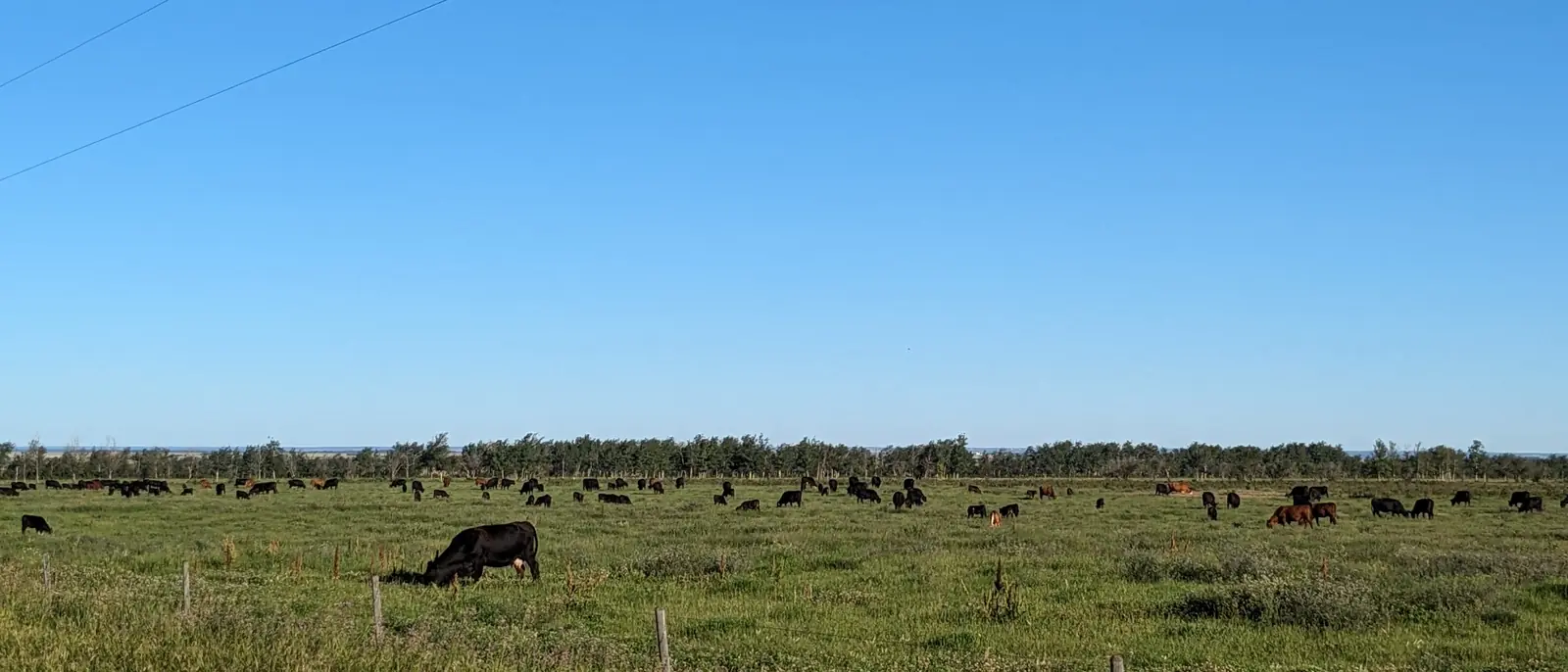
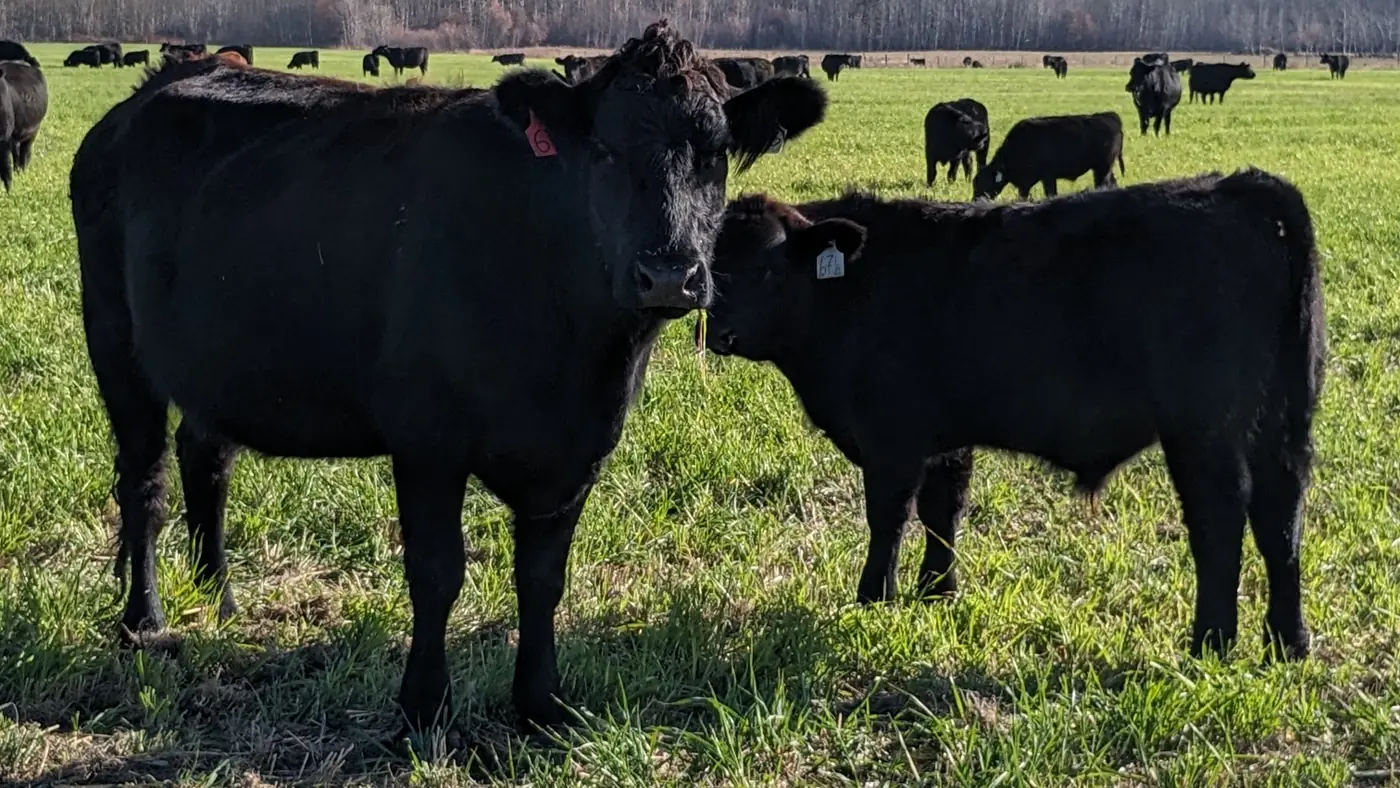
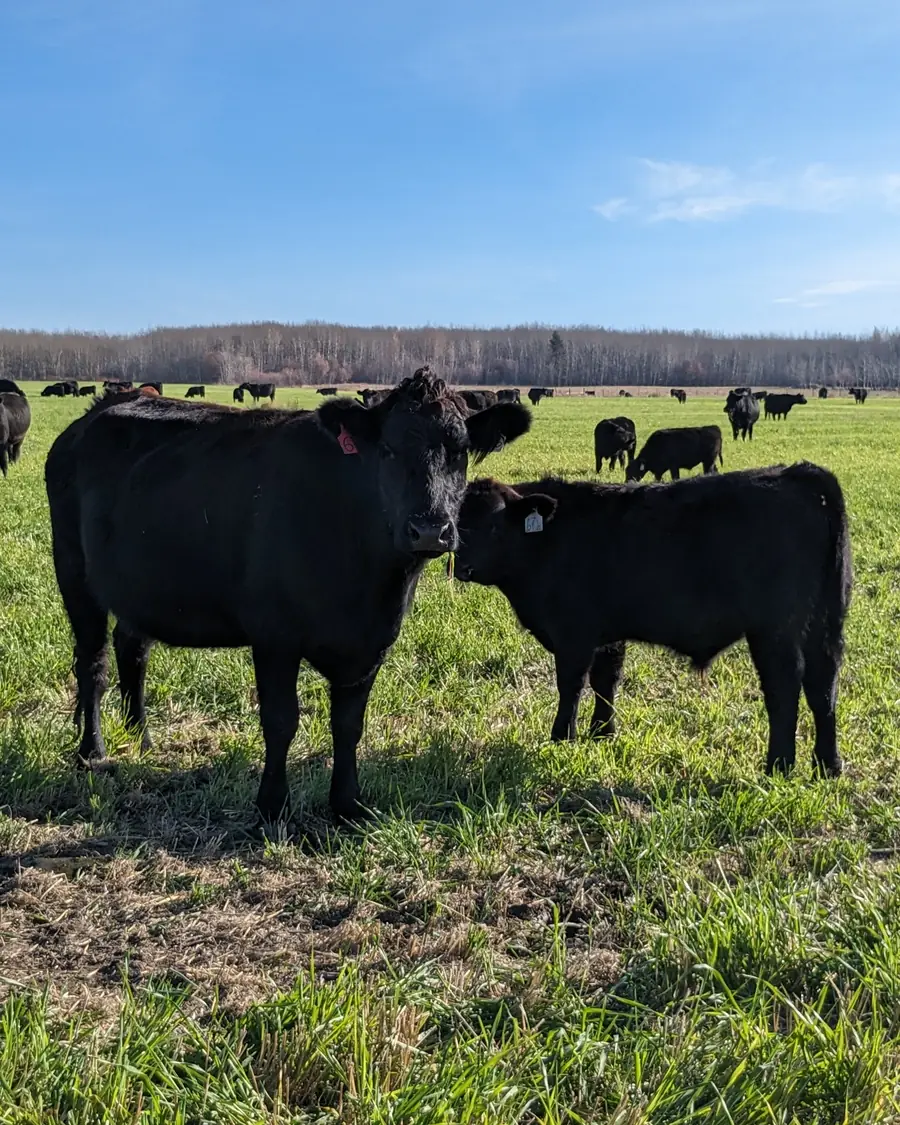
Most beef is built to move fast. Ours isn't. Up here the days stretch past sixteen hours in June, the grass comes in thick and sweet, and the cattle take their time on it. That patience is the whole product.
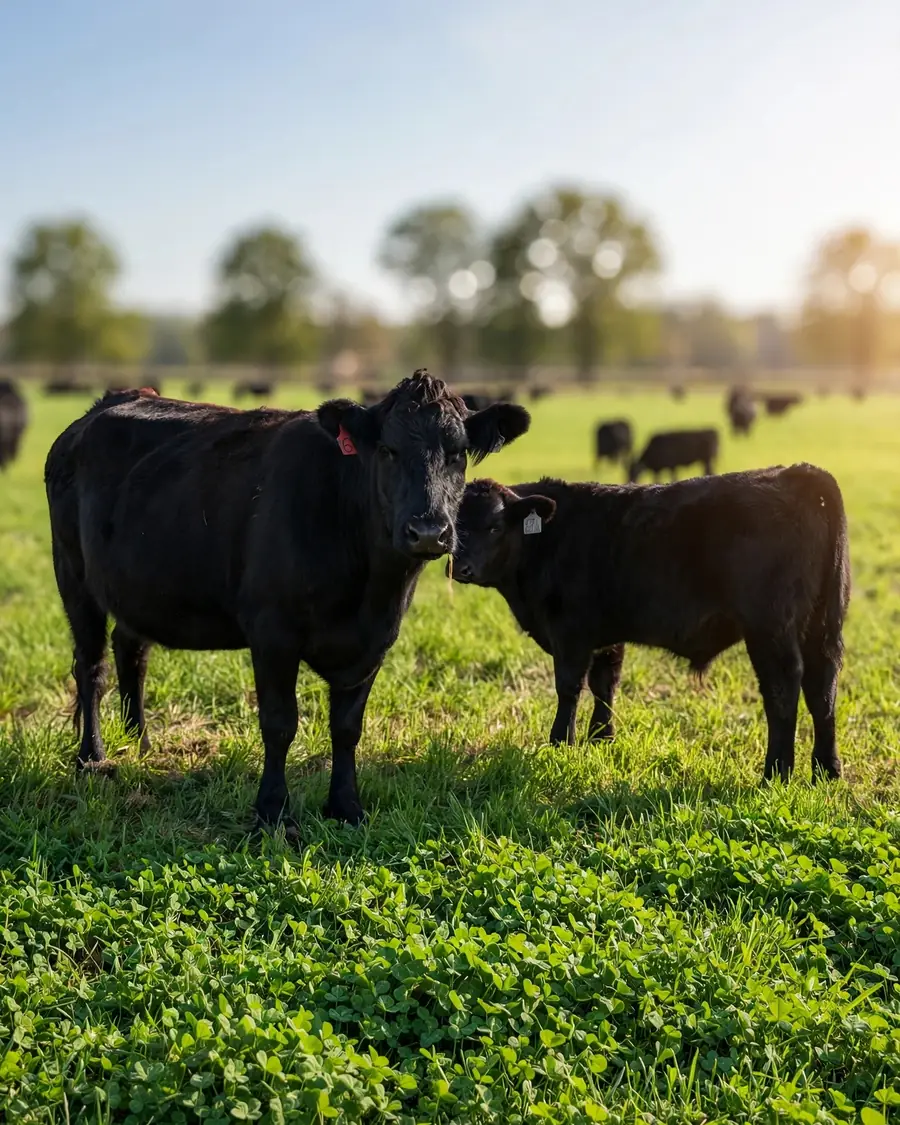
Peace Country summers run late into the evening. Pasture grows fast and stays sweet, and the herd grazes long after the sun would have set further south.
We don't push weight. The cattle finish on their own clock, which is the only way to lay down marbling that fine and that even through the muscle.
Same people at calving, same people at loading, same people answering the phone when you call. Nothing changes hands in the dark.
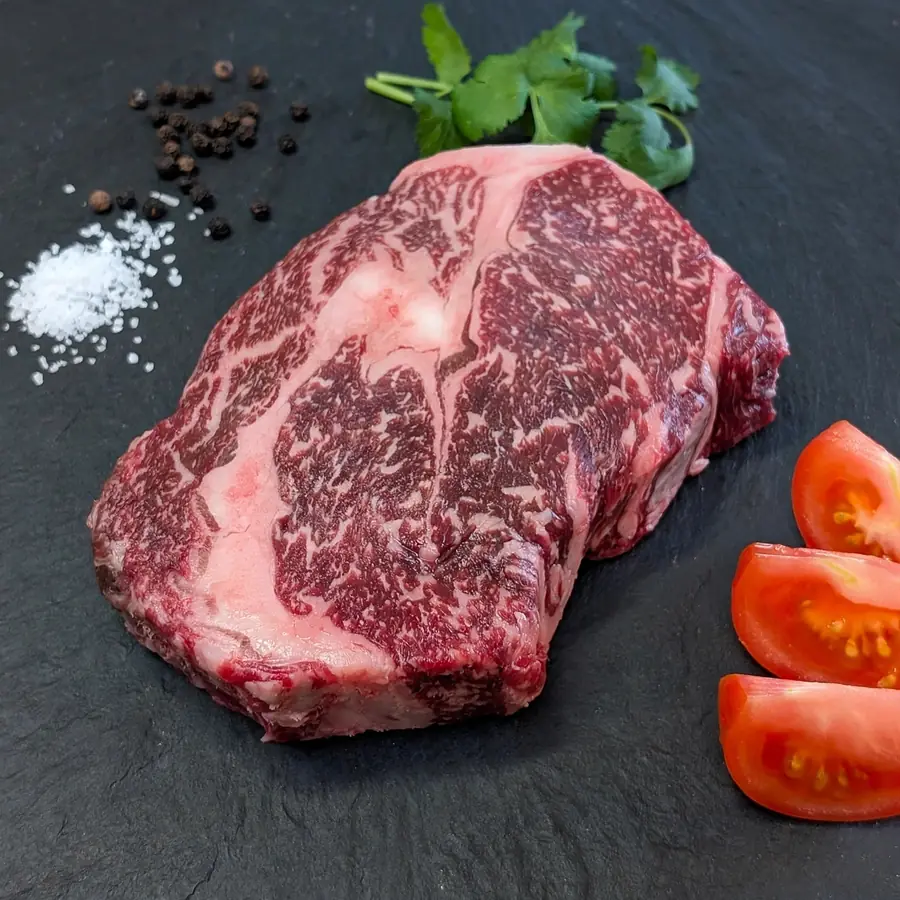
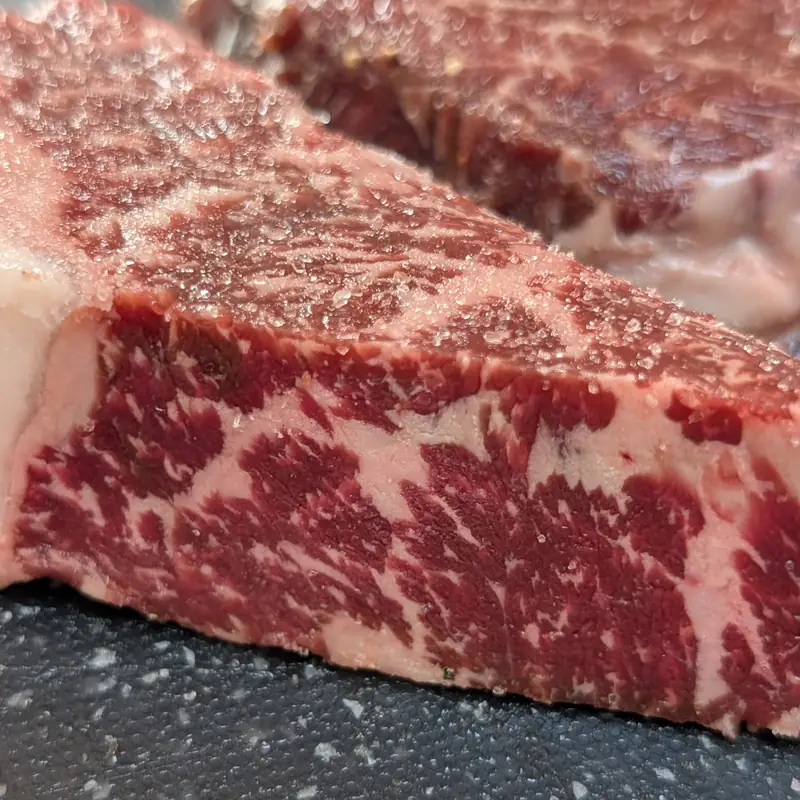
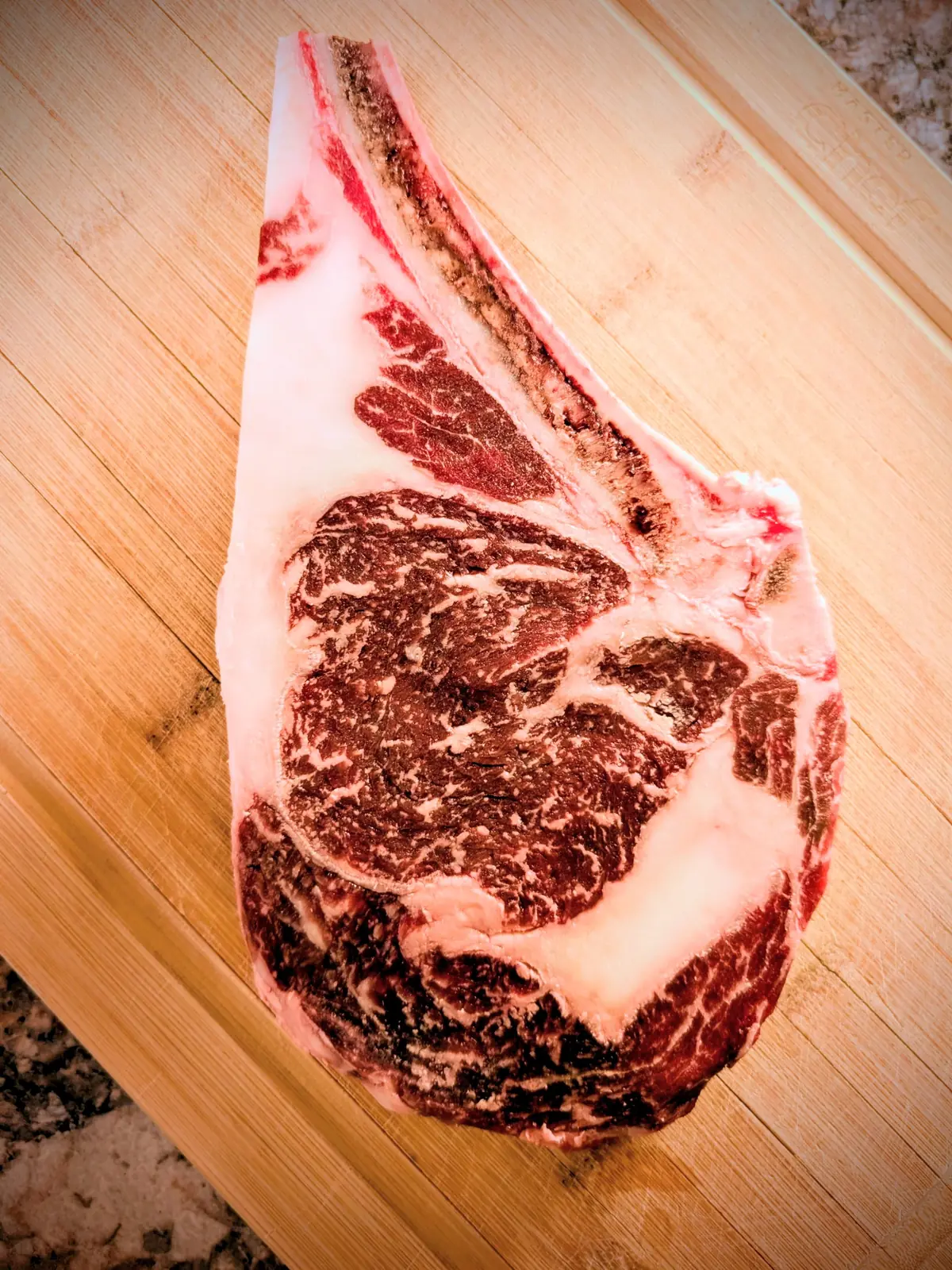
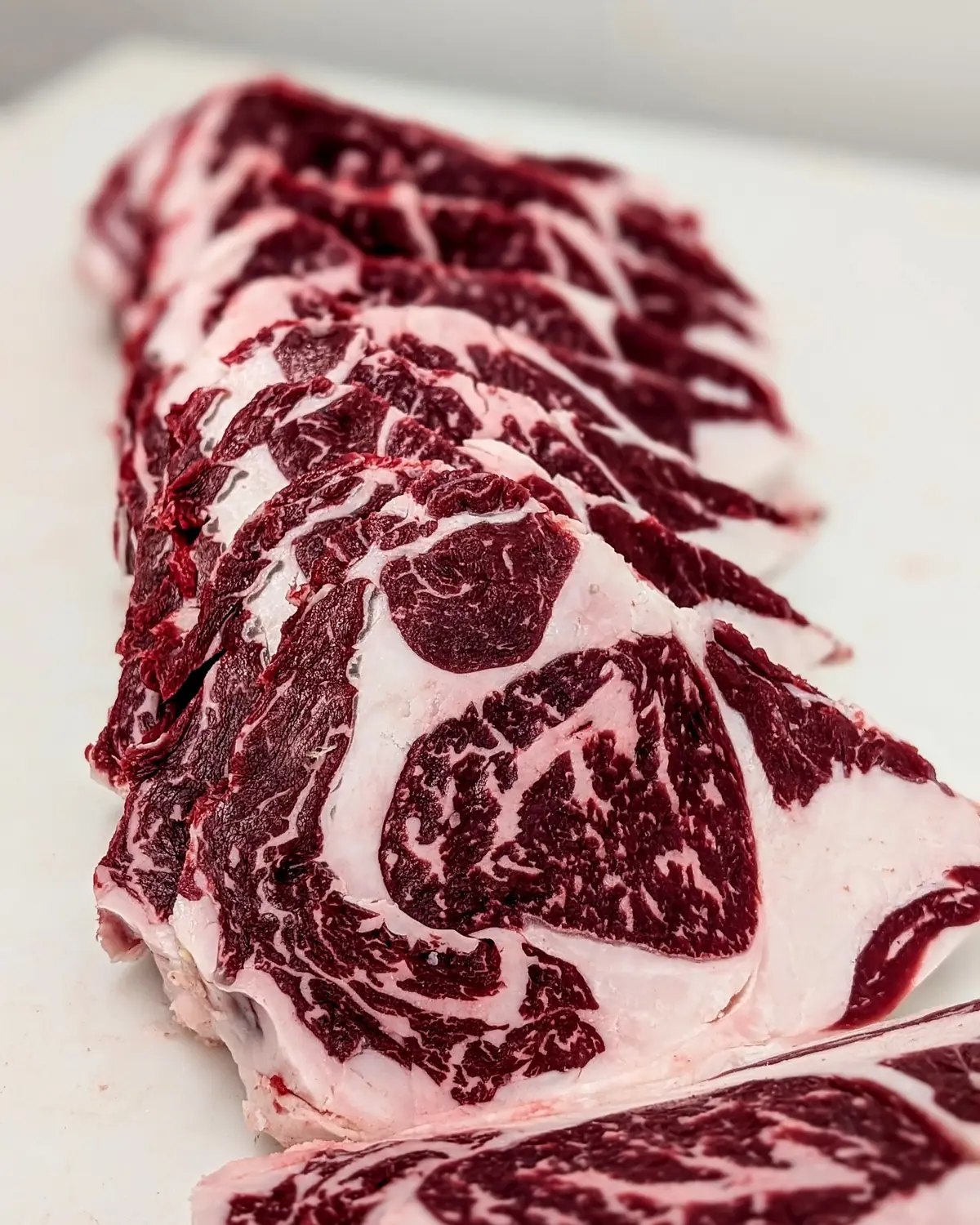
That web running through the muscle is intramuscular fat, and it melts at close to body temperature. It's why a Wagyu steak doesn't need a sauce, a rub, or an apology, and why people who say they don't really like steak tend to go quiet halfway through one.
Four hundred kilometres north of Edmonton, the growing season is short and bright and the winters are honest. It's a hard place to farm and a very good place to raise cattle slowly.
Duey and Anne started it. Jacob and Sara, Eli and Kianna, Hannah and Paul carry it now, plus a running count of grandchildren who are mostly useful at fencing time.
We're not a brand that bought a herd. We're a family that raised one, and then had to figure out the website part afterward.
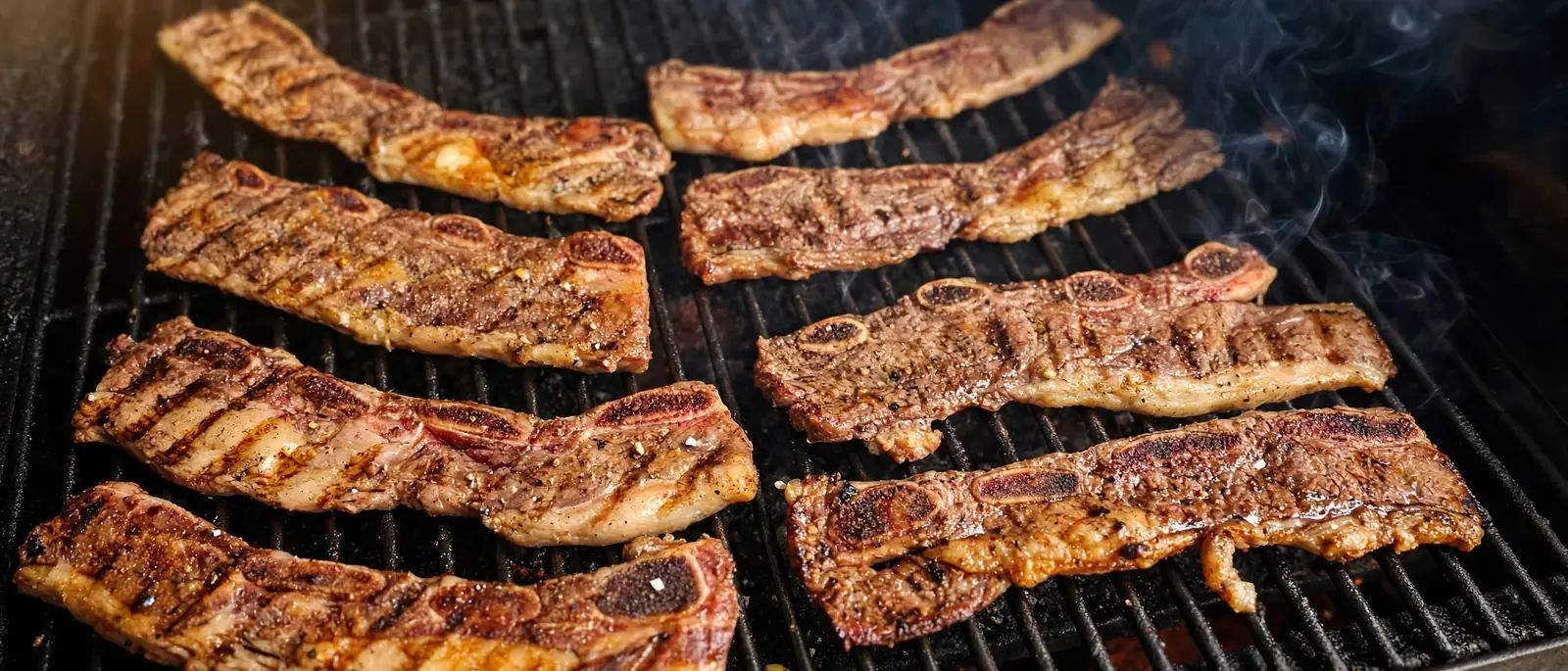
Wagyu punishes fussing. Get the pan properly hot, keep it simple, pull it earlier than you think, and let it sit. Everything else is just confidence.
One email when a new batch is cut, one when something's nearly gone, and the occasional thing worth cooking on a Sunday. Nothing else.
No spam. Unsubscribe any time.
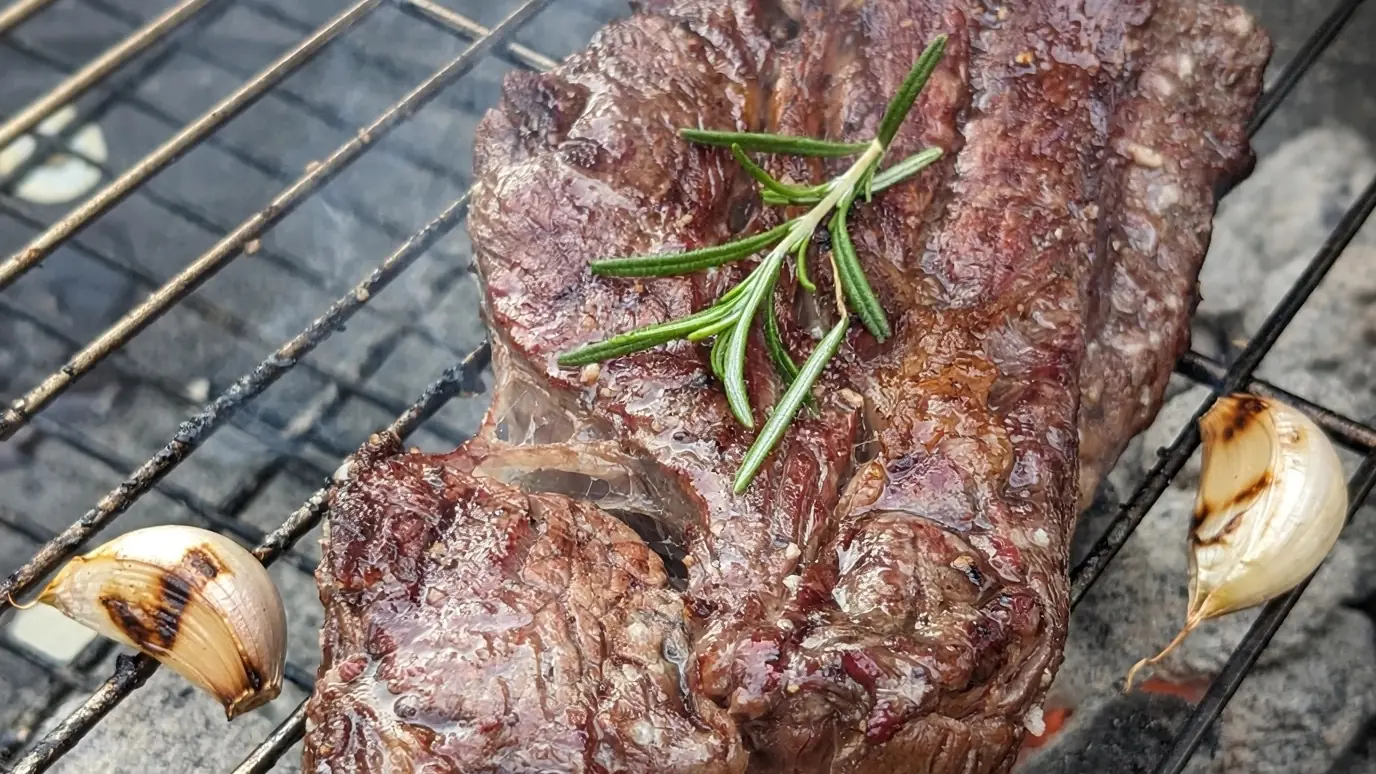
Butchered in small batches and flash-frozen at peak. If something's sold out, it means the batch is genuinely gone, not sitting in a warehouse somewhere.
The best price per pound we offer, and the closest thing to how our own family eats. You choose the cutting instructions; we handle the rest and have it ready frozen and boxed.

Built by the people who cut it, for the way people actually cook. Good place to start, better place to gift from.
We set out to raise it properly. Selling it directly to you was just what happened once we realised how much gets lost between a good animal and a grocery store shelf.
The Peace Country is the top edge of where farming works in Alberta. Short season, long days, cold that means it. Grass grows here like it's making up for lost time, and the cattle that graze it get the benefit.
There's no romance in a 38 below morning checking heifers. But there's a reason we haven't left.

A commercial herd, a quarter section, and the usual amount of optimism. Placeholder: replace with your real founding year and the story you'd tell at a kitchen table.
A deliberate bet that doing one thing exceptionally would beat doing the ordinary thing at scale. Replace with the real year and where the genetics came from.
Jacob & Sara, Eli & Kianna, Hannah & Paul. Three households, one operation, and a lot of shared equipment.
No auction barn, no middleman, no mystery. You order, we cut, it arrives.

It's about the Friday your brother-in-law shows up and you've got something worth cooking. The birthday you didn't book a restaurant for. The ordinary Tuesday that turned out better than expected.
We raise the animal. You make the memory. That trade has worked out well for both of us so far.
For restaurants, butchers and retailers who'd rather name their farmer than their distributor. Whole carcass, primal, or a standing order of the cuts you actually move.
Take the animal as it comes and break it your way. Best value, full control, and the cuts your competitors can't get.
Agree the cuts and cadence once and we'll hold them back for you each batch. No scrambling when the menu is already printed.
Put the farm on your menu and mean it. We'll give you the photography, the story and an open invitation to come see the herd.
We'd rather have a short conversation than send a generic sheet. Volume, cuts, frequency: start with whatever you know.

This is not a recipe. It's four things to get right and a list of things to stop doing.
24 hours in the fridge. Then an hour on the counter so it isn't fighting the pan from cold.
Coarse salt, both sides, right before it hits the heat. No oil, there's enough fat in there already.
Cast iron, screaming hot, two to three minutes a side. You want crust, not a slow render.
Half as long as you cooked it, minimum. Cutting early is how all that fat ends up on the board.
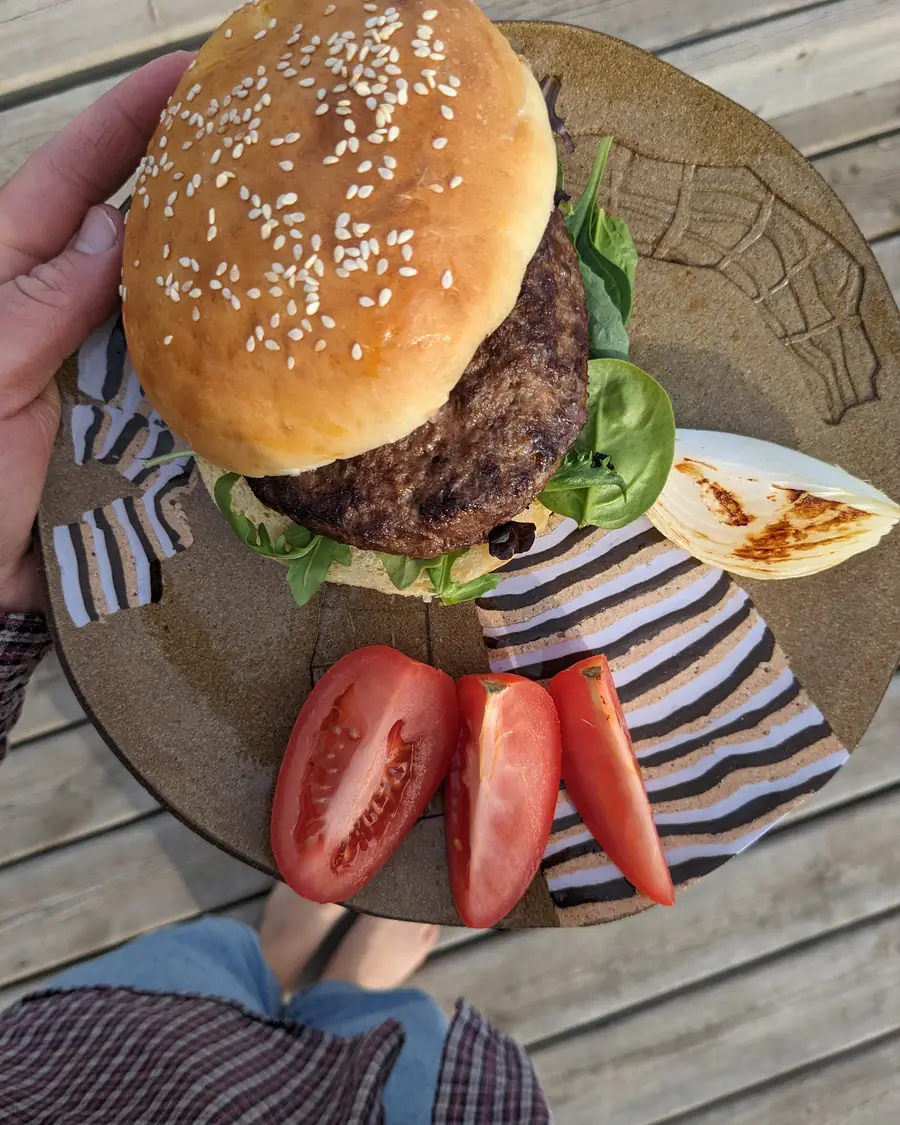
Whole beef cuts 63 °C (medium-rare), 71 °C medium, 77 °C well done. Ground beef must reach 71 °C, and that includes our Wagyu ground and burger patties, which are not a "cook it rare" product. Mechanically tenderized beef: 63 °C, turned at least twice.

A conventional steer is finished in about four to six months. Ours takes closer to two years. Almost everything else on this page follows from that one number.
Marbling is not something you can add at the end. It goes on slowly, over months, and there is no way to hurry it. That is the whole cost of Wagyu in one sentence.
Typical industry ranges. Every extra day is feed, bedding, labour and risk carried by the farm before anything is sold.
和牛. Wa, Japanese. Gyū, cattle. It is not a grade and it is not a quality mark. It refers to four cattle breeds formally recognised in Japan in 1944: Japanese Black, Japanese Brown, Japanese Shorthorn and Japanese Polled.
More than 90% of Japan's beef herd is Japanese Black, and that is the breed everyone actually means when they say Wagyu. It is the one that carries the marbling.
Almost every Wagyu animal outside Japan descends from fewer than 250 cattle exported between 1976 and the late 1990s. It is a very small gene pool, which is part of why these animals are expensive before anyone has fed them anything.

Beef carries fat in three places and only one of them is marbling. It is why a fatty looking steak is not necessarily a marbled one.
The fat cap, sitting under the hide on the outside of the muscle. You trim most of it off. It contributes almost nothing to how the steak eats.
Seam fat, running between whole muscles in the connective tissue. Useful in a slow braise, largely irrelevant to a steak.
Fat deposited inside a single muscle, in the sheath between bundles of muscle fibres. This is marbling, and it is the only one that becomes flavour and juiciness on the plate.
A good conventional steak carries roughly 4 to 8% intramuscular fat. Japanese Black beef has been measured averaging over 30%. That is not a small difference in degree. It is a different food.
Marbling in Japanese Black is strongly heritable, linked to a set of genes affecting fat synthesis rather than any single "marbling gene." Genetics load the dice. A long, slow finish is what actually puts the fat there.
The most precise marbling scale in the world. Every carcass in Japan is scored against physical reference standards by a trained grader.
Swatches are illustrative renderings of increasing intramuscular fat, not photographs of graded carcasses.
Most grading systems were built to sort commodity beef, so they stop caring once marbling gets high. The Japanese scale keeps going. Across the top band alone, from BMS 8 to BMS 12, the intramuscular fat roughly doubles.
A5 is the label everyone knows, but Quality Grade 5 covers everything from BMS 8 to BMS 12. A steak at the bottom of that band and one at the top are both sold as A5. The BMS number is the half that actually tells you something.
Not because it sounds better, but because it is the only one with enough resolution to describe what we raise. Canada Prime is a floor with no ceiling. A carcass that just clears it and a carcass marbled far beyond it receive the same three words.
So we give you a BMS number. It is a finer measurement, it is the standard the rest of the Wagyu world speaks, and it lets you compare what we sell against anything else you are considering.

| Japan BMS | Japan grade | Australia AUS MEAT | USDA | Canada |
|---|---|---|---|---|
| 1, 2 | 1, 2 | 0, 1 | Standard | Canada A |
| 3 | 3 | 1, 2 | Select | Canada AA |
| 4 to 6 | 3, 4 | 2 to 5 | Choice | Canada AAA |
| 7 | 4 | 5, 6 | Prime (minimum) | Canada Prime |
| 8, 9 | 5 | 6 to 8 | Prime | Canada Prime |
| 10 to 12 | 5 | 9 and above | beyond the graded range | Canada Prime |
Read this table sceptically. No grading authority anywhere, Canadian, Japanese, American or Australian, publishes an official conversion between these systems. Each measures marbling differently, at different rib positions, against different reference standards. Reputable sources disagree by as much as two BMS points. Anyone showing you a precise conversion chart is showing you an opinion.
Wagyu marketing has a folklore problem. Here is what we have left off this page on purpose, and why.
Wagyu fat is higher in monounsaturated fat than conventional beef. That part is real. But a Wagyu steak also carries more total fat and more saturated fat per serving, not less. We are not going to call a 25% fat steak a health food. It is a treat. Treat it like one.
Measured melting points for Wagyu fat average around 36 °C against roughly 42 °C for conventional beef fat. Genuinely lower, and you can taste the difference. But the range between individual animals overlaps, and the "melts at 25 °C" figure that circulates online is not supported by any measurement we could find.
Repeated everywhere, sourced nowhere. Live exports tailed off in the late 1990s, and Japan legislated real protection for Wagyu genetics in 2020. Also: no beer, no massage, no classical music. The actual explanation, heritable marbling and a very long finish, is less romantic and more impressive.
We don't ship or deliver door to door yet. Instead, we bring orders to three drop-off points each week. Pick the one that suits you at checkout.
Orders come to the drop-off frozen and packed. Bring a cooler if you have a drive ahead of you, and get it into your freezer the same day.
Your payment went through and your order is booked for drop-off. A receipt is on its way to your email.